
This MG sedan came to Tower Audio for full sound deadening across all four doors.
Rather than applying material to only the easily accessible sections of each door, we treated both the outer door skins and inner door skins. This gives much more complete coverage of the metal panels that can vibrate while driving or while the audio system is playing.
Vehicle: MG sedan
Work completed: Four-door sound deadening
Areas treated: Front and rear doors, including inner and outer door skins
Purpose: Reduce door panel vibration and create a better acoustic environment inside each door

Why Sound Deaden All Four Doors?
A car door is made from several relatively large sections of sheet metal. These panels can resonate from road vibration, speaker movement and normal vehicle operation.
Sound deadening material adds mass and damping to these panels, helping control unwanted movement.
For this MG, the work was completed across all four doors rather than only the front doors. Treating the complete set gives consistent treatment throughout the cabin and is particularly useful when the vehicle’s front and rear speakers are both being used as part of the sound system.
Outer Door Skin Sound Deadening
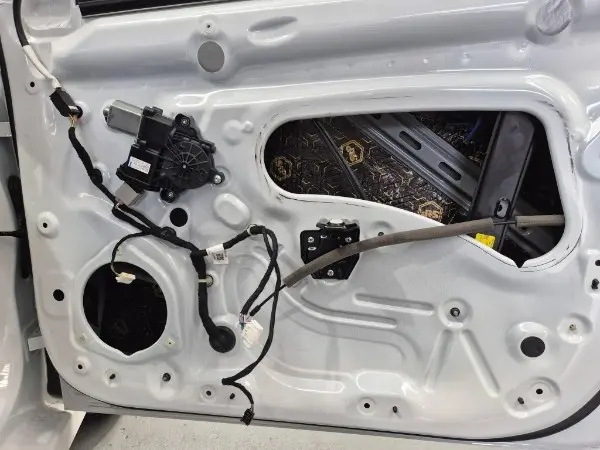
Once the door trim and required internal components were removed, we gained access to the inside surface of the outer door skin.
This is the large metal panel directly behind the exterior painted surface of the door. Because of its size and relatively thin construction, it can act as a resonating panel.
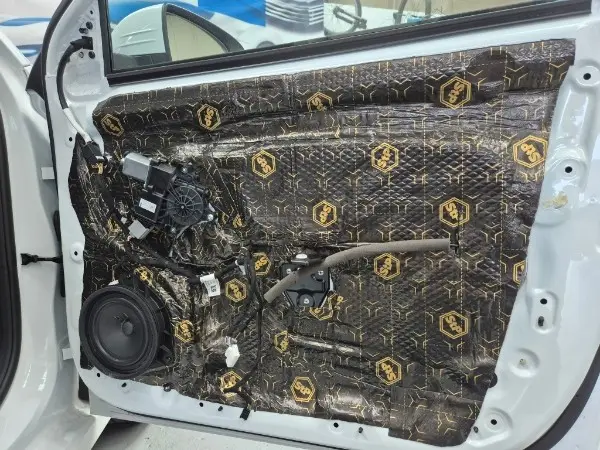
Sound deadening material was applied directly to the accessible sections of the outer skin.
The purpose is not simply to cover every visible centimetre with material. Correct placement is intended to control panel resonance while keeping clear of window mechanisms, wiring, drainage areas and other moving components inside the door.
Inner Door Skin Sound Deadening
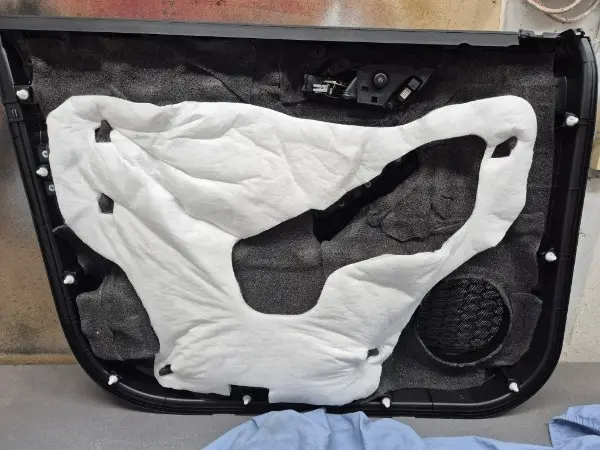
The inner skin was also treated on each of the four doors.
This section sits closer to the door trim and contains the mounting points and openings used for speakers, wiring and other components.
Treating both sides of the door structure gives more complete damping than working on only one panel.
In an audio installation, controlling movement in these metal surfaces can also provide a firmer environment around the speaker mounting area. A speaker is intended to move its cone to produce sound; unwanted movement from the surrounding door panel can work against that.
Why We Treated Both Door Skins
There is a difference between adding a few pieces of deadening material around a speaker and carrying out full door treatment.
On this MG sedan, the work included:
- Both front doors
- Both rear doors
- Accessible sections of each outer door skin
- Inner metal door sections
- Careful refitting of the original door trims and components
Treating the inner and outer skins addresses two separate metal surfaces that can contribute to vibration.
It also means the work supports the entire door structure rather than concentrating only on the immediate speaker location.
Does Sound Deadening Make a Car Quieter?
Door sound deadening can reduce vibration and some noise entering or being transmitted through the doors, but it should not be confused with complete vehicle sound insulation.
Tyres, wheel arches, the floor, firewall, roof, glass and other areas can all contribute to cabin noise.
For this MG sedan, the work was specifically focused on the four doors. Treating the doors is often chosen when panel resonance is the main concern or when sound deadening forms part of a larger car audio project.
Sound Deadening and Car Audio
Doors are a major part of many factory and aftermarket car audio systems because they usually contain the main front and rear speakers.
The speaker itself is only one part of the installation. The surface it is mounted to also affects how the system behaves.
Adding damping material to the door structure can help reduce unwanted panel movement around the speaker.
For owners planning a larger system change, sound deadening can be completed alongside a car audio upgrade or as separate work before other audio equipment is installed.
What People Often Get Wrong About Door Sound Deadening
More material does not automatically mean better work.
A car door contains window regulators, glass, electrical wiring, locking mechanisms, drainage points and factory fittings. Sound deadening needs to be installed without interfering with these components.
Material also needs firm contact with the metal surface. Simply placing sheets loosely behind a door trim will not provide the same damping effect as material properly applied to the panel itself.
Access, surface preparation and correct placement are therefore an important part of the job.
MG Sedan Four-Door Sound Deadening in Melbourne
For this MG sedan, all four doors were stripped as required, the accessible inner and outer metal skins were treated, and the original components and trims were refitted.
It is a good example of the difference between basic speaker-area treatment and a more complete four-door sound deadening job.
If you are considering sound deadening as part of a speaker or audio system change, Tower Audio can also assess how the existing doors, speakers and installation are set up before recommending the work required.
See our car audio installation service in Melbourne or contact Tower Audio to discuss your vehicle.